





What Do Different Dashboard Warning Lights Mean in Your Car
 11 hours ago
 140 Hits
What Do Different Dashboard Warning Lights Mean in Your Car
When a new light appears on your dashboard, it is not always clear what it means or how soon you need to act. Knowing how to read these alerts helps you decide whether to keep driving or ask for help. We explain the colour codes, the common symbols, the lights that need urgent attention, what to do when one appears, and the maintenance habits that help.
How Can You Identify Dashboard Warnings by Colour?
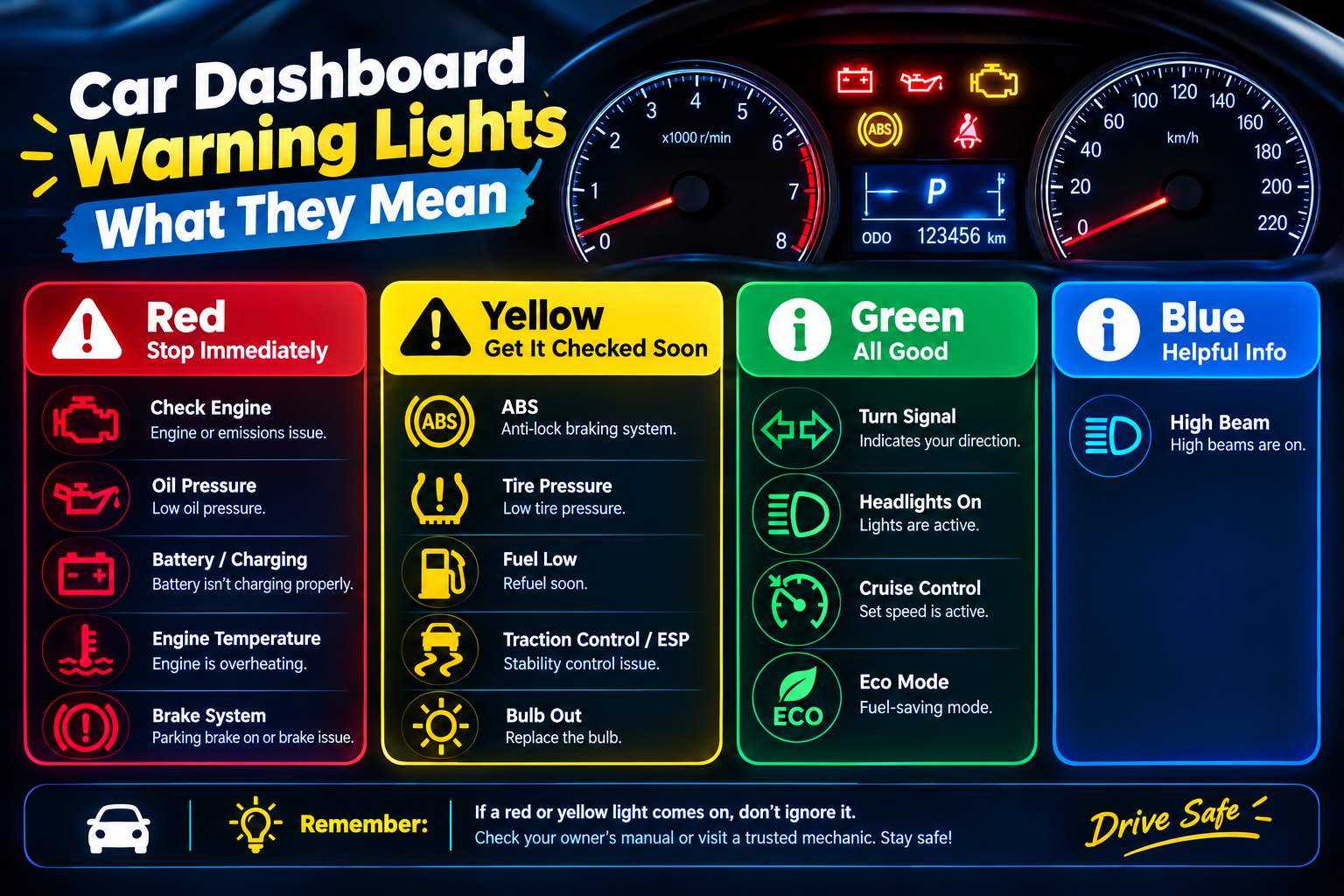
Red usually points to an urgent problem, amber to a condition that needs attention, and green, white or blue to a feature that is currently active. One exception is the red seatbelt reminder, which is a safety prompt and not a mechanical fault.
Most lights glow for a few seconds when you start the car as a self-check, then turn off. Don’t let a light go out or appear in the middle of a drive without being checked.
A flashing traction control light is normal on a wet road, since the system is working to keep your tyres gripping. A flashing check engine light is different, as covered below.
Which Dashboard Warning Lights Should Every Driver Know?
The most common lights are the seatbelt, low fuel, parking brake, door open, tyre pressure, and traction control symbols. Knowing them is the first step in answering "What Do Different Dashboard Warning Lights Mean in Your Car?" Some only remind you to act, while others signal a problem that can affect performance or safety.
- Seatbelt reminder: Lights up, often with a sound, when someone is unbelted.
- Low fuel: Shows that the tank has reached its reserve. Refuel soon, since a dry tank can strain the fuel pump.
- Parking brake: Stays on while the handbrake is engaged. Driving with it applied wears the brake pads and discs.
- Door or boot open: Warns that a door, boot or bonnet is not fully latched.
- Tyre pressure: Turns on when a tyre is low on air. Check the pressure of each tyre with a gauge and fill it to the level specified in your owner’s manual.
- Traction or stability control off: A steady light means the system is switched off or has a fault. Switch it back on if you turned it off, or schedule a check if the light stays on.
What Do the Most Important Warning Symbols Indicate?
The most important symbols point to problems in the engine, oil system, cooling system, or charging system. Each can cause costly damage if you keep driving.
Check engine light
The engine control unit (ECU), which monitors how the engine is running, has detected a fault. It could be anything small, such as a loose fuel cap or an error in a sensor or the emissions system. A steady light call requires a diagnostic scan soon. A flashing light can point to a severe misfire or another urgent engine fault that may damage the catalytic converter, so stop driving and call for help.
Oil pressure light
A red oil can indicator means that the engine oil pressure is too low. Low oil, a leak, a clogged filter or a failing pump can cause it. Stop in a safe spot, turn off the engine and check the oil level. If the light stays on after topping up, do not restart the engine.
Engine temperature light
A thermometer symbol on the dashboard means the engine temperature is too high. Low coolant, a leak, or a faulty fan are common causes. Park in a safe area, turn off the engine, and let it cool before you do anything else. Never open the coolant cap while the engine is hot, because the system is under pressure, and check your owner's manual before inspecting it.
Battery light
The battery is not charging properly. A weak battery, faulty alternator, or loose wiring can be behind it. If you keep driving, the car can lose its power and stop suddenly.
Which Dashboard Warning Lights Require Immediate Attention?
Any red light, brake, ABS, airbag, and power steering light should never be ignored. These systems help to manage your ability to stop, steer and protect in a collision. The car could still be driving normally with a fault in it, and so delay is tempting.
- Brake warning: Points to low brake fluid, worn pads or a fault in the braking system. If it stays on with the handbrake released, stop driving and call for help.
- ABS light: Your regular brakes still work, but the wheels can lock up in a hard stop, and you may lose steering control. How far the car takes to stop also depends on the road surface.
- Airbag light: The airbags may not function properly in a crash if this light is on. Have the system checked at an authorised service centre soon.
- Power steering light: Your car's steering can feel heavy, mostly at low speeds and in tight turns. Get it checked soon, before the steering gets heavier.
What to Do When a Warning Light Appears on Your Dashboard?
Start by identifying the symbol, then notice whether the car feels or sounds different. Some lights mean you should stop right away, while others can wait for a planned inspection. Your owner’s manual is the best place to find the answer to “What Do Different Dashboard Warning Lights Mean in Your Car?” because symbols differ from model to model.
- Confirm the symbol. Match it with the page in your manual and note whether the light is steady or flashing.
- Pull over if needed. If the car feels unsafe or the problem looks urgent, stop in a safe place and switch off the engine.
- Check the basics. Check the fuel cap, tyre pressure, engine oil level and, once the engine has cooled, the coolant level.
- Call for help. Use roadside assistance if the light does not clear or the car feels unsafe to drive.
- Get a scan. A technician scans the stored fault codes, which point to the affected system and guide the search for the underlying fault.
- Avoid quick resets. You may clear a light all you want, but if you don’t fix the root cause, you’re only covering over the problem.
Even if a light turns off on its own, we recommend having a scan performed, as the fault code may remain stored.
How Regular Car Maintenance Can Help Prevent Warning Lights
Some dashboard warnings can be avoided by regular servicing; when the fluid level is low, worn parts or battery issues can be prevented from impacting performance. It cannot prevent all the lights from coming on, as sensor and electronic failures can occur at any time.
- Tyres: Check pressure every month and before long trips.
- Fluids: Inspect engine oil, coolant and brake fluid regularly.
- Wear parts: Replace brake pads when they wear down, and have the battery tested during service.
- Driving style: Smooth acceleration and braking reduce stress on the engine and brakes.
Read to Know: Why Monsoon Car Service is Critical for Safe Driving?
Book a Car Service at Your Nearest Indus Motors Service Centre
Indus Motors is a leading Maruti Suzuki car dealer in Kerala, with outlets in all 14 districts. That makes it easy to find a service centre close to where you live or work anywhere in Kerala. If a warning light stays on, or your car is due for its regular service, our team can check it and recommend to you what needs attention. An early check often keeps a small fault from turning into a bigger repair. Book your car service at your nearest Indus Motors service centre today.
Contact us and start your journey with Indus Motors!
Read to Know: What’s New in the 2026 Maruti Suzuki Baleno? Key Updates Buyers Should Know