

















Why Monsoon Car Service is Critical for Safe Driving?
 1 month ago
 355 Hits
Why Monsoon Car Service is Critical for Safe Driving?
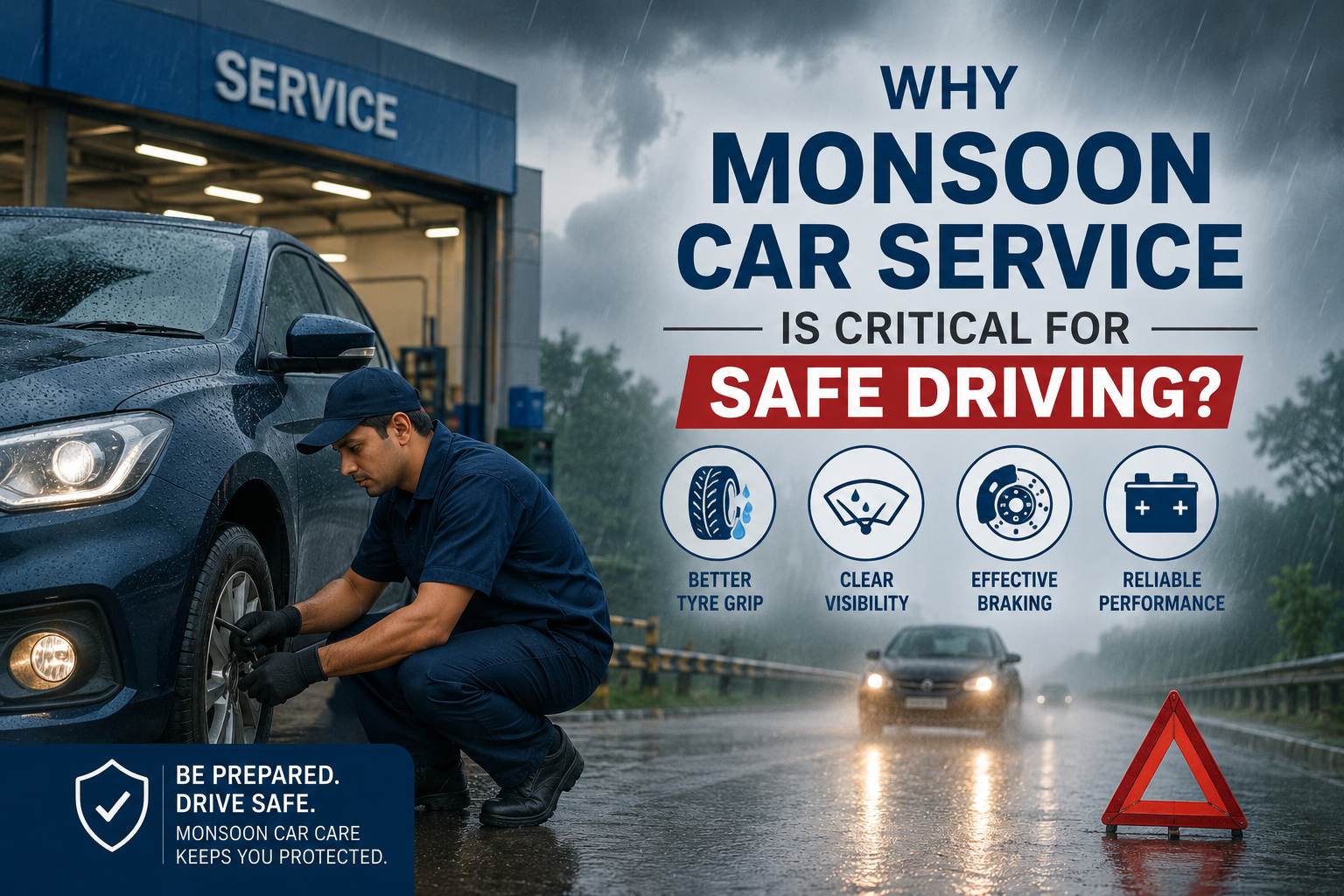
You may be an expert driver. But driving in monsoons brings its own challenges. A once familiar ride suddenly feels so hazardous. A few challenges are the torrential downpours, waterlogged streets, poor visibility, and slick asphalt test.
Under these demanding conditions, never rely on a vehicle that isn’t fully prepared. It can be a significant risk. This is precisely why monsoon car service is critical for safe driving. Take the timely initiative to inspect and prepare your vehicle before or during the rainy season. That would make sure that essential safety systems respond effectively when you need them most.
How Monsoon Weather Affect Your Car?
Monsoons can impact every component of your car negatively.
- High Humidity & Moisture: Monsoons come with high ambient moisture levels. This can result in rust and corrosion. It happens primarily on the exposed metal components, underbody panels, and exhaust systems.
- Slippery Surfaces: Road surfaces lose grip as rainwater mixes with oil residues, dirt, and debris. This can affect your vehicle stability.
- Electrical issues: Water can enter inside from deep puddles. It can reach sensitive electrical wiring, blown fuses, or sensors. It causes unexpected electronic malfunctions.
- Cabin Seals: Heavy rainfall can affect the door, window, and windshield rubber seals. Old and damaged seals let water leak into the cabin. This would lead to damp upholstery and foul odors.
What a Monsoon Car Service Can Catch Early?
Opting for preventive maintenance prior to monsoons can help detect the subtle issues early. This will help the vehicle owners avoid the escalated repair costs later on.
- Corrosion & Rusting: Mechanics identify early signs of body and undercarriage oxidation. They would apply protective coatings before moisture causes structural damage.
- Minor Electrical Shorts: Go for a thorough diagnostic check. This makes sure that wiring looms, relays, and battery terminals are completely sealed. This will help prevent moisture getting into the engine or inside the components.
- Fluid Contamination: Water can seep into reservoir caps or breather hoses. This can contaminate engine oil, brake fluid, or transmission fluid.
- Seal Integrity: Regularly check rubber gaskets around doors, sunroofs, and the boot. It can prevent unexpected rainwater inside your cabin.
Brake Performance Matters More on Wet Roads
Rainwater can act as a lubricant between the brake pads and rotors. This can result in increased braking distance. Imagine your brakes are already underperforming. This will make your braking performance suffer during the monsoons.
Opting for pre-monsoon lets the technician takes care of the following factors –
- Brake Pad Thickness: Ensuring pads have sufficient friction material to disperse water efficiently.
- Rotor Surface: Checking for uneven wear, scoring, or rust buildup that compromises braking contact.
- Brake Fluid Levels & Quality: Brake fluid is hygroscopic, meaning it absorbs moisture from the air over time. Moisture lowers the fluid's boiling point, leading to a spongy pedal feel and diminished stopping force.
Tyres and Grip: Your First Line of Safety
The tyres are the only point of contact between your vehicle and the road. Your vehicle should have a proper tread depth to maintain good contact with the road.
Maintenance options in this context include
- Tread Depth: Ensuring tyres exceed the legal minimum limit so channels can effectively pump water away from the contact patch.
- Tread Wear Patterns: Spotting uneven alignment or inflation issues early. This will help maximize road grip.
- Tyre Pressure: Maintaining exact manufacturer-recommended PSI levels. The under-inflated or over-inflated tyres significantly reduce traction on slippery roads.
- Spare Tyre Condition: Verifying that your emergency spare is fully inflated and ready for use.
Better Visibility Starts with Proper Maintenance
Clear visibility during the monsoons is yet another important factor to consider. This can go a long way in preventing accidents.
A proper service before monsoons can help in following checks –
- Wiper Blades: Replace cracked, hardened, or streaking wiper blades to maintain a clear windshield view.
- Windshield Washer Fluid: Topping up with a specialized wiper fluid that helps dissolve road grime and oily residue.
- Demister & Air Conditioning: Servicing the HVAC system so the demister quickly clears windshield condensation caused by temperature differences
- Lighting Systems: Checking that headlights, tail lights, fog lights, and turn indicators are bright and operating correctly.
Don't Ignore the Engine, Fluids and Filters
The rainy weather can place a high demand on your powertrain and filtration system.
Pay special attention to these areas:
- Engine Air Filter: A wet or clogged air filter restricts airflow to the engine, dropping fuel efficiency and performance.
- Engine Oil & Coolant: Verifying fluid levels and ensuring caps are tightly sealed against moisture contamination.
- Battery & Terminals: Cold, damp weather strains your battery. Clean the terminal corrosion and test voltage. This will make sure that your car does not face starting problems.
Why Is Undercarriage Inspection Important During Monsoon?
The underside of your car perhaps bears the heavy brunt of the monsoon fury. Driving through flooded streets can trap moisture in hidden frame crevices, accelerating corrosion if left uncleaned.
A detailed undercarriage inspection focuses on -
- Cleaning out accumulated mud and road grit that trap moisture against metal surfaces.
- Inspecting protective underbody coatings and applying anti-rust treatments where necessary.
- Checking the exhaust pipe, suspension joints, and floor pan for rust or structural damage.
- Examining rubber boots on CV joints and steering racks to ensure water hasn’t compromised internal lubrication.
Read to Know: Maruti Suzuki Victoris vs Brezza: Key Comparisons You Must Know
Final Thoughts – Why Monsoon Car Service Shouldn't Be Delayed
It is never advisable to avoid the periodic and seasonal maintenance. We at Indus Motors always recommend taking a proactive approach in improving the condition of your vehicle. It is thus essential to understand why monsoon car service is critical for safe driving. This will help you avoid any potential breakdowns and protect your investment. This makes sure that you can drive with complete confidence throughout the heaviest downpours.
Want to keep your vehicle in prime condition during the monsoons? Choosing the right service partner is absolutely essential. Indus Motors are the No. 1 Maruti Suzuki car dealers in Kerala. We provide comprehensive seasonal care. Our services help you handle challenging rainy conditions. We have state-of-the-art service outlets established across all districts in Kerala. This makes sure that expert care is always within easy reach.
Do not wait until something results in rain-induced issues. Book your car service at the nearest Indus Motors service center today. Enjoy safe, worry-free driving all season long.
Contact us and start your journey with Indus Motors!
Read to Know: New Maruti Suzuki Brezza 2026: Facelift That Fits Your Drive