















When to Replace Car Tyres: A Car Tyre Guide for Every Driver
 7 months ago
 2045 Hits
When to Replace Car Tyres: A Car Tyre Guide for Every Driver
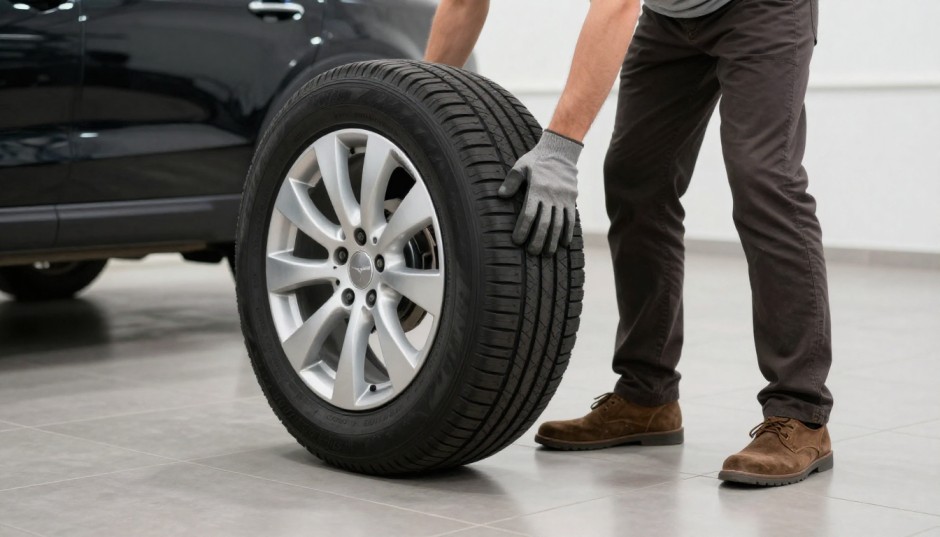
Vehicle maintenance in Kerala is often dictated by the calendar, yet many drivers overlook the only four points of contact between their car and the road. Relying on a tyre until it physically disintegrates is a high-stakes gamble that ignores the technical degradation of rubber. In a state characterized by heavy monsoon downpours and high-humidity environments, your stopping distance is determined more by your tread depth than your braking system. If you are navigating the winding sections of the MC Road or the heavy traffic on NH-66 with compromised rubber, you are significantly increasing your risk of hydroplaning. Understanding When to Replace Car Tyres is a fundamental requirement for road safety that goes beyond simple aesthetics.
The lifespan of a tyre is influenced by heat cycles, storage conditions, and driving habits. Rubber is an organic compound that hardens over time, losing its ability to grip the asphalt even if the car is rarely driven. Most Maruti Suzuki owners in Kerala assume that plenty of tread means the tyre is safe, but structural integrity often fails from the inside out. A tyre that has sat in the tropical heat for six years has likely lost its pliability, making it prone to sudden blowouts or losing traction during emergency braking. Indian tyre experts recommend replacement every 40,000–50,000 km or by the 6-year DOT date, as sidewall cracks from coastal conditions signal imminent failure.
The Technical Indicators of Tread Wear
The legal limit for tread depth in India is 1.6mm, but waiting for this threshold is often a mistake. For drivers in regions with frequent rain, a depth of 3mm is the practical limit for maintaining safety on wet surfaces. You can verify this using the Tread Wear Indicators (TWI) molded into the grooves of the tyre. When the tread is flush with these small horizontal bars, the tyre is no longer capable of displacing water effectively.
Bald tyres create a layer of water between the rubber and the road, leading to a total loss of steering control. This is the primary consequence of ignoring the Signs to change your car tyre. If you notice the car "skating" over puddles or if the ABS triggers more frequently than usual during moderate braking, your tread depth is likely insufficient. Do not wait for a complete loss of grip to investigate the health of your wheels.
Physical Damage and Structural Red Flags
Internal damage is often more dangerous than external wear because it is harder to detect during a casual walkaround. Sidewall bulges, often called "bubbles," indicate that the internal cords of the tyre have snapped due to hitting a pothole or a sharp curb. These bulges represent a localized weak spot that can result in a catastrophic failure at high speeds. There is no repair for a sidewall bulge. If you see an uneven protrusion on the side of your tyre, replace it immediately before your next trip.
Salt air and coastal humidity in Kerala trigger rapid oxidation of rubber compounds. When fine cracks appear on the sidewalls or between tread blocks, the rubber has lost its elasticity. This brittleness causes structural failure during cornering as the tread potentially peels away from the carcass at high speeds.
Performance Cues and Vibrations
Your steering wheel usually registers structural issues before they are visible. A consistent shudder that gets worse as you speed up often indicates an internal belt shift or a flat spot. While basic balancing at an Indus Motors workshop fixes surface issues, persistent vibration usually means the tyre is deformed internally.
- Uneven Wear Patterns: If the inner or outer edge of the tyre is wearing faster than the center, your alignment is out of sync or your suspension components are failing.
- Frequent Pressure Loss: A tyre that requires topping up every week likely has a slow leak or a compromised bead seal, signaling that the structural fit on the rim is failing.
- Hardness of the Rubber: Press your thumbnail into the tread; if it leaves no mark and feels like hard plastic, the heat cycles have "cooked" the rubber, and it needs to be retired regardless of the tread depth.
Ignoring these Signs to change your car tyre leads to increased fuel consumption and excessive strain on your vehicle's suspension. When a tyre is out of round or improperly balanced, the shock absorbers and bushings have to work twice as hard to dampen the resulting vibrations, leading to expensive repairs down the line.
The Age Factor: Structural Integrity and the DOT Code
Tread depth is a deceptive metric. Rubber is a perishable chemical that degrades without usage. Kerala’s humidity and extreme asphalt heat accelerate oxidation, making older tyres brittle and prone to structural failure. While a five-year-old tyre might have significant tread left, the internal bond between the steel belts and the rubber begins to weaken. Check the manufacturing date via the DOT code on the sidewall. A code like "1422" identifies production in the 14th week of 2022. If your vehicle is running on rubber older than six years, the risk of structural failure during a high-speed run on the Kochi-Salem highway increases. Replace them by the ten-year mark regardless of appearance. Old rubber loses the elasticity required for emergency maneuvers.
Read to know: Top 10 Tips For Car Tyre Maintenance
Practical Replacement Strategies
When it comes to deciding When to Replace Car Tyres, it is always best to replace them in pairs or as a full set of four. Replacing only one tyre creates an imbalance in traction and rolling resistance, which can confuse modern electronic stability programs. If you must replace only two, the new tyres should always be fitted to the rear axle. This provides better stability and prevents oversteer in wet conditions, which is far more difficult for the average driver to control than understeer.
Indus Motors provides specialized tyre health checks during routine service intervals. We verify the alignment, check for hidden punctures, and assess the rubber hardness to ensure your Maruti Suzuki remains a safe asset. A proactive approach to tyre health is a financial decision; it is much cheaper to replace a set of tyres than to repair the bodywork after a traction-related accident.
Final Safety Observations
Tyre maintenance is not a subjective choice. It is a technical requirement for the operation of your vehicle. The quality of your rubber determines how your car accelerates, turns, and stops. If you are sensing a change in the way your car handles the road, do not dismiss it as "road feel."
Verify your tread depth regularly. Keep your tyres inflated to the manufacturer’s recommended pressure to prevent uneven heating. By paying attention to the physical and performance signals of your vehicle, you ensure that your digital and mechanical systems can actually do their job when an emergency occurs. Safety is built on the reliability of your components, and your tyres are the foundation of that reliability.
Please visit the nearest Indus Motors service center to carry out a proper car inspection and check the condition of the tyres.
Read to know: Top 5 Reasons To Buy The Maruti Suzuki Victoris